
Tags
Antonio Gramsci, Assessment for Learning, Belfast, brain science, brain-based learning, Carmel Gallagher, CCEA, CCEA’s Revised Curriculum, Curriculum reform, Delpit, Designing a curriculum for the 21st century, Diane Ravitch, Dr Hugh Morrison, Gavin Boyd, Harvard’s transition from admissions test to profile, Left Back, mereological fallacy, neuromyths, neuroscience, Pierre Bourdieu, Progressive Education, pseudo science, pupil profile, Queen's University, Robert Sylwester, snake oil, traditional subject-based curriculum
>a href=”https://paceni.wordpress.com/wp-content/uploads/2014/01/newscientistbrain.jpg”>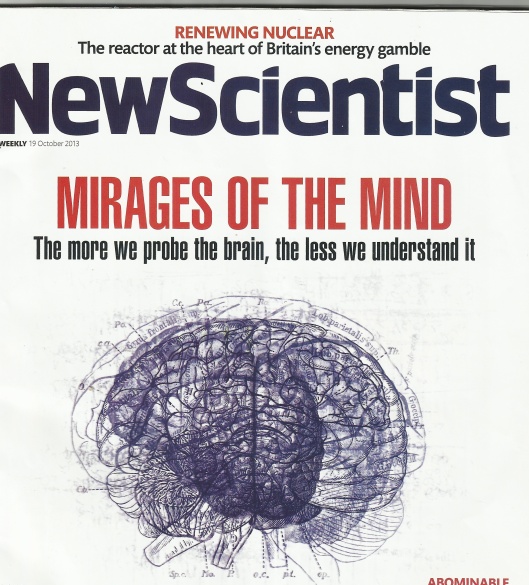
The consequences for children from socially disadvantaged backgrounds of the current proposals for revising curriculum and assessment in Northern Ireland
Dr Hugh Morrison
School of Education
The Queen’s University of Belfast
23.10.2005
Summary
Mid-way through the last century, America abandoned “Progressive Education” because of its damaging effects on children from poor families. At the heart of progressivist teaching and learning was the “project” which addressed a problem in the “real world” and which pupils solved in collaboration, often drawing on concepts from a range of subject domains. Teaching was “thematic” and the traditional curriculum, centred on subject-specific knowledge and skills, was set aside for one determined by a range of projects which the pupils found emotionally engaging and therefore motivating. Progressivists believed that in a rapidly changing world, where what was considered fundamental today could be deemed irrelevant in a matter of months, pupils should “learn how to learn” by acquiring “accessing” skills rather than striving to master the rules of English grammar, or becoming proficient with mathematical algorithms.
Pupils needed to acquire “critical thinking skills,” “higher-order skills,” “problem-solving skills,” “discovery skills,” “lifelong learning skills” and “meta-cognitive skills.” Rather than mastering subject knowledge, pupils should develop skills which would enable them to find knowledge through collaborative activity which nurtured their emotional well-being and inculcated personal and civic virtues. All endeavours to maximise pupils’ grades and test scores were frowned upon as merely encouraging competition which had the potential for damaging self-esteem and threatening the pupil’s love for learning. The teacher was urged to switch roles from one who merely “transmitted knowledge” to one who facilitated the pupil’s acquisition of “inquiry skills” by creating a learning environment conducive to discovery. The latest “educational science” was used to undermine those who continued to make the case for more traditional approaches to teaching and learning.
Recent American experience of portfolio assessment reveals that portfolio-based curricula (the type favoured by progressivists) can, for example, undermine the acquisition of basic numeracy skills (Koretz, Stecher, Klein, McCaffrey and Deibert, 1994). Ravitch (1983, 2000) claims that in progressivist schooling, while the parents of children from middle class backgrounds can have their children coached in the basics at home, the basic skills of children from more deprived backgrounds simply atrophy through lack of practice. Drill and practice had no place in the progressive classroom and therefore middle class parents ensured that such skills were practised at home. For less fortunate children, from homes which weren’t conducive to study, school provided the only opportunities to practise basic skills. Progressivist reluctance to devote class time to drill and practice was therefore particularly injurious to the life chances of these less fortunate children.
Delpit (1986, pp. 380-381), a teacher who had just emerged from training in the progressivist approach, endorses Ravitch’s (2000) thesis that children from deprived backgrounds often simply “don’t get the point” of progressivist classrooms:
I had an open classroom; I had learning stations; I had children write books and stories to share; I provided games and used weaving to teach math and fine motor skills. I threw out all the desks and carpeted open learning areas. I was doing what I had learned – and it worked. Well at least it worked for some of the children. My white students zoomed ahead. They worked hard at the learning stations. They did amazing things with books and writing. My black students played the games; they learned to weave; and they threw the books around the learning stations. They practised karate moves on the carpet. Some of them even learned how to read, but none as quickly as my white students. I was doing the same thing for all my kids – what was the problem? … As my classroom became more “traditional,” however, it seemed that my black students improved in their reading and writing.
This paper aims to demonstrate an equivalence between CCEA’s proposals for curriculum reform and failed American progressivism. The new curriculum’s emphasis on higher order skills such as listening skills, research skills and problem-solving skills can be seen in an extract (below) from the Key Stage 3 sample Pupil Profile on CCEA’s website. In the section entitled “modern languages,” parents might expect to find test scores or grades indicating their child’s proficiency in reading, writing and speaking Spanish, for example. However, the Profile entry, which is typical of all the entries, is written in vague progressivist argot which could permit the wealthy, articulate parent to secure an unfair advantage over the less privileged parent by making the most of prose lending itself to almost any interpretation:
Paula is learning to listen effectively and is developing confidence in her spoken Spanish. She has enjoyed using email to correspond on familiar topics with her Spanish e-pal in our partner school and has made good use of ICT sources to locate information for our class Spanish Holiday Project. While she readily takes the lead in group work and is always willing to make decisions, she needs to be encouraged to listen to and respect the opinions of others. This would allow her to broaden her thinking and develop her capacity to experiment with different approaches to problem solving.
The vagueness of this language could prove uniquely damaging to the children of socially disadvantaged parents and the Costello Pupil Profile could usher in all the difficulties currently associated with comprehensive schooling, where the poor are left to settle for poor schools. As Heath, Ermish and Gallie (2005, p. 5) – editors of an authoritative work on education reform and social mobility – conclude:
The main conclusion of the sociological research must be that much of this reform activity, such as the introduction of comprehensive schooling, has been ineffectual in reducing social inequalities in outcomes.
Gray (2005, p. 78) confirms this view:
Consequently, it has proved hard to claim that the comprehensive systems dotted around the country had either demonstrably superior effects on pupil performance than those where selection (or some degree of selection) had been retained or an impact on class differentials.
The claim that the new curriculum is progressivist begs the question, “why would CCEA be tempted to adopt a curricular model rejected four decades ago because of its deleterious effects on the poor?” At least part of the reason could be that they believe that advances in our understanding of the structure of the human brain favour a re-examination of the progressivist ideal. Maybe a new progressivism built on brain science will alleviate social disadvantage rather than exacerbating it. The “brain sciences” have pride of place in CCEA’s scientific rationale for the new curriculum. Alas, CCEA get the science entirely wrong, falling prey to what philosophers call the “mereological fallacy.” Given the ease with which this pseudo science can be debunked, the entire rationale for radical curriculum reform crumbles.
Presumably it is CCEA’s hope that parents, teachers and policy-makers will embrace a more thematic curriculum, founded on the collaborative solution of cross-curricular tasks selected for their appeal to young people, if the case for such a curriculum can be shown to have a basis in science. But the science comes from the “brain-based learning” movement. Nowhere in serious scientific journals is it claimed that the structure of the brain has lessons for curriculum design.
 <
<
The writings of Robert Sylwester, who addressed CCEA’s “Mind Power 21” conference, give the best insight into the “science” that underpins the new curriculum. Because the brain is “junglelike,” Sylwester posits that there should be less time devoted to basic skills; rather, “thematic curricula, cooperative learning and portfolio assessment” should dominate the curriculum. Such unproven assertions aren’t science.
One of the central features of progressivism is the changing role of the teacher from one who instructs and guides, to one who “facilitates.” At the heart of CCEA’s model is the novel concept of “Assessment for Learning” (AfL) in which pupils take greater responsibility for assessing their own work and that of their peers. “Comment only marking” is another feature of AfL; teachers are encouraged to restrict themselves to a verbal comment when marking pupils’ work, and are discouraged from giving test scores and grades because this impacts negatively on motivation and pupil self-concept. Now CCEA might argue that there are aspects of AfL – such as comment-only marking – which would be considered so unpalatable to parents that they could find no place in the new curriculum. But CCEA have no room for manoeuvre here because the “robustness” of the Costello profile is predicated on robust teacher assessment. By failing to enforce comment-only marking CCEA would be, to use assessment jargon, “threatening consequential validity,” thereby vitiating the fitness-for-purpose of the Costello Profile.
What can be said about the capacity of Northern Ireland education reform to alleviate social disadvantage? The Pupil Profile’s failure to comply with any of the accepted norms of the measurement literature, together with its capacity for multiple interpretations, could lead to de facto comprehensive schooling which has been powerless to alleviate class inequalities (Breen, 2005). CCEA’s Revised Curriculum would claim to differ from the progressivism of the first few decades of the last century in that it has a strong scientific underpinning, but this paper undermines that notion. What Northern Ireland schools are being offered is precisely what American schools offered their children in the first few decades of the 20th century: a curriculum injurious to the life chances of the disadvantaged. In short, assessment and curriculum combine to maximise social differentials.
Introduction
In a brief (unpublished) paper, “Reliability and validity in the Costello Profile,” this author used the educational measurement literature to demonstrate that the Costello Profile cannot guide parents in choosing appropriate post-primary schools for their children. In an earlier (also unpublished) paper, “The case for an alternative to the Costello Pupil Profile,” it was argued that the Profile – which uses language capable of many interpretations – could be exploited by the wealthy to steal a march on parents from poor and working class backgrounds. Moreover, there is a danger that the private tutor who hitherto “drilled” the pupil in preparation for the Transfer Test might now be employed by wealthy parents to complete the work that eventually forms the basis of the tutee’s Profile. The vague language used in the Profile, together with its openness to abuse by those with the necessary financial resources, could mean that the move from objective test to profile reduces rather than enhances social mobility.
Indeed, champions of the socially disadvantaged, like the early Marxist thinker Antonio Gramsci and the neo-Marxist Pierre Bourdieu, appear to endorse just this view:
When in 1923 Mussolini’s Minister of Education, Gentile, anticipated later progressive practice by expanding the Italian examination system to assess creativity and character as well as factual knowledge, Gramsci opposed the measure on the grounds that the less objective the testing, the more the working-class child or peasant child would be at a disadvantage. Later British experience confirmed Gramsci’s fears: during the late 1960s many local education authorities in England and Wales retained selective academic secondary schools, but supplemented or replaced IQ and attainment tests by teacher assessment of learning potentiality; in every case the percentage of children from lower socio-economic status groups entering the selective schools fell. (Partington, 1990, p. 87)
Thus, to take examinations as an example, it is quite clear that the more vaguely what they ask for is defined, whether it be a question of knowledge or of presentation, and the less specific the criteria adopted by the examiners, the more they favour the privileged. (Bourdieu, 1974, p. 40)
It is this stress on objectivity that prompted the author to suggest an alternative to the Costello Profile. The CAT-mediated Pupil Profile allows the primary school child to develop a formative test-when-ready profile comprising objective measures of Literacy, Numeracy and ICT, which can inform the subsequent conversation between the child’s parents and the post-primary headteacher.
Jerome Karabel’s (2005) detailed study of Harvard’s transition from admissions test to profile, “The Chosen,” may help teachers, parents and policy-makers anticipate the likely impact on social mobility of the current proposals.
In 1905, Harvard College adopted the College Entrance Examination Board tests as the principal basis for admission, which meant that virtually any academically gifted high-school senior who could afford a private college had a straightforward shot at attending. By 1908, the freshman class was seven percent Jewish, nine percent Catholic, and forty-five per cent from the public schools. (Gladwell, 2005, p. 80)
The striking statistic for current purposes is the large percentage of undergraduates from ordinary non-fee paying state (so-called “public”) schools entering an Ivy League university when selection was by examination. However, Harvard’s concern was with the seven percent Jewish entry, for the College conceived of Jews as “sickly and grasping, grade-grubbing and insular” (Gladwell, 2005, p. 80). These places allocated to Jews were displacing the children of wealthy Harvard alumni who made significant financial contributions to the College. To address the problem, Harvard introduced a profile with only one of its four dimensions devoted to academic attainment. The four profile dimensions were: personal, academic, extra-curricular and athletic. The most heavily weighted dimension was the personal dimensional with its criteria couched in vague language; Harvard prided itself on identifying “intangibles.”
According to Harvard’s own analysis, the personal rating was a better predictor of admission than the academic rating. Those with a rank of 4 or worse on the personal scale had, in the nineteen-sixties, a rejection rate of ninety-eight per cent. Those with a personal rating of 1 had a rejection rate of 2.5 per cent. … When the Office of Civil Rights … investigated Harvard in the nineteen-eighties, they found handwritten notes in the margins of various candidates’ files. “This young woman could be one of the brightest applicants in the pool but there are several references to shyness,” read one. (Gladwell, 2005, p. 83)
The move from objective entry criteria, based mainly on academic attainment, to profiles, effected a dramatic collapse in the number of Harvard undergraduates from the public schools.
The focus of this paper is curriculum rather than assessment. It sets out to demonstrate an equivalence between the Northern Ireland Council for the Curriculum, Examinations and Assessment’s (CCEA) curriculum proposals and the American progressivist curriculum movement of the first half of the last century. CCEA’s use of neuroscience to claim that they are looking forward to a curriculum relevant to the 21st century, rather than looking back to an outdated and discredited progressivism, is rejected. It is argued that their use of ideas from the “brain-based learning” movement replaces serious scientific discourse with little more than pop science. With the appeal to neuroscience undermined, the case is made that CCEA are offering a re-packaged form of the progressivism which collapsed half a century ago largely because of its negative impact on the socially disadvantaged.
The scientific rationale for CCEA’s curriculum proposals
CCEA cite new knowledge of how the brain works among their reasons for changing the curriculum in Northern Ireland schools. In the section entitled “rationale for the revised curriculum and assessment proposals” of the Pathways documents (CCEA, 2003b, p. 22) the following appears:
Recently neuroscience has established a number of factors, which are critical to learning and to motivation, about how our brains process information. We now know that the human brain creates meaning through perceiving patterns and making connections and that thought is filtered through the emotional part of the brain first. The likelihood of understanding taking place is therefore increased significantly if the experience has some kind of emotional meaning, since the emotional engagement of the brain on some level is critical to its seeing patterns and making connections. … Neuroscience, therefore, highlights the need for learning to be emotionally engaging, particularly during the 11-14 range when so much is going on with adolescents to distract them from school.
It would appear that study of the brains of 11-14 year-olds reveals the need for a curriculum in which they work on ideas that they find stimulating rather than striving to master domain-specific knowledge. CCEA are employing neuroscience in support of a more child-centred curriculum where pupils are motivated by the relevance to their future lives of the problems they pursue. The paragraph immediately following the one cited above makes clear that CCEA believe that “brain-based learning” prompts a radical departure from the traditional subject-based curriculum:
It seems that, in order to be motivated to learn, young people need opportunities to explore real problems and to think through their responses, making meaningful connections and, ideally, create their own meaning, rather than being “taught” solutions or having meaning created for them. The challenge is therefore to make learning developmentally appropriate to the age and maturity of the learner; socially relevant; emotionally engaging; motivational, in the sense of being explicitly relevant to real-live contexts; cognitively challenging; and connected. (CCEA, 2003b, p. 22)
Almost every facet of American progressivist education appears in this extract and, given the negative impact of that curriculum model on the life chances of the poor, it is important to confirm that CCEA’s interpretation of brain-based learning has merit before Northern Ireland schools adopt an out-dated curriculum model centred on children’s interests. Ravitch (2000, p. 460) condemns progressivist curriculum developers:
Their conscious effort to build curricula around children’s interests instead of intellectually challenging studies implied not only anti-intellectualism but a huge disadvantage for children of poor and immigrant families, because (as Dewey noted) children’s interest are conditioned by what they already know and have previously been exposed to.
CCEA emphasise that the curriculum be designed around what children want rather than the traditional academic subjects whose status in the curriculum, according to CCEA, is sustained by little more than tradition and custom. In a piece entitled “Designing a curriculum for the 21st century” which appears on the Qualifications and Curriculum Authority’s website, CCEA’s manager for curriculum development bemoans the fact that, “Certain subjects have populated the curriculum since the 18th century and have grown so much in strength and familiarity over time that their credentials are not even questioned.” CCEA claim that neuroscience teaches that this compartmentalisation of the curriculum into discrete subjects should be replaced by a more thematic framework:
Our current emphasis on learning within separate subject disciplines dates back at least a century and is based on the notion that each subject is a distinct form of knowledge with separate characteristics, concepts and procedures which encourage efficient learning. Over the last decade, we have begun to learn more about how the brain processes information … We are beginning to question the wisdom of compartmentalising learning whilst expecting young people to cope with multi-dimensional problems. (CCEA, 2003c, p. 2)
Finally, CCEA use neuroscience to place collaborative project work in which learning is contextualised, relevant and emotionally engaging at the centre of the curriculum:
Recent brain research indicates that the brain searches for patterns and interconnections as its way of making meaning. Researchers theorise that the human brain is constantly searching for meaning and seeking patterns and connections. Authentic learning situations increase the brain’s ability to make connections and retain new information. When we set the curriculum in the context of human experience, it begins to assume a new relevance. (CCEA, 2003c, p. 3)
It is clear that CCEA predicate this radical transformation of schooling on ideas derived from the brain-based learning movement. If CCEA’s reading of neuroscience were founded on sound science then teachers might feel compelled to rethink entirely how they teach and how pupils learn. The aim of this paper is to make the case that CCEA have based curriculum reform in Northern Ireland on pseudo science.
Why CCEA has confused science with pop science
If the reader glances back though the quotations from CCEA’s curriculum documents presented in the previous section, it will be clear that CCEA attribute a range of activities to the brain. Brains “process information,” “create meaning,” “perceive patterns,” “make connections” and “search for patterns.” Now where is the scientific evidence for these claims? There are no laboratory demonstrations of brains creating meaning or perceiving patterns. These are activities carried out by human beings, not by their brains. No one would dispute that without a functioning brain an individual couldn’t process information or search for patterns, but it doesn’t follow that the individual’s brain is doing the information processing or the searching.
To mistakenly attribute properties to the brain which are, in fact, properties of the human being is to fall prey to what neuroscientists refer to as the “mereological fallacy.” To further explore this error it is instructive to consider the writings of one of the world’s most eminent neuroscientists, Max Bennett:
Psychological predicates are predicates that apply essentially to the whole living animal, not to its parts. It is not the eye (let alone the brain) that sees, but we see with our eyes (and we do not see with our brains, although without a brain functioning normally in respect of the visual system, we would not see). So, too, it is not the ear that hears, but the animal whose ear it is. The organs of an animal are part of the animal, and psychological predicates are ascribable to the whole animal, not its constituent parts. Mereology is the logic of part/whole relations. (Bennett & Hacker, 2003, pp. 72-73)
Those who offer seminars and in-service training in “brain-based learning” often refer to brains “thinking,” “knowing,” “believing,” “deciding,” “seeing an image of a cube,” “reasoning,” “learning” and so on.
We know what it is for human beings to experience things, to see things, to know or believe things, to make decisions … But do we know what it is for a brain to see … for a brain to have experiences, to know or believe something? Do we have any conception of what it would be like for a brain to make a decision? … These are all attributes of human beings. Is it a new discovery that brains also engage in such human activities? (Bennett & Hacker, 2003, p. 70)
In the words of possibly the greatest philosopher of modern times: “Only of a human being and what resembles (behaves like) a living human being can one say: it has sensations; it sees, is blind; hears, is deaf; is conscious or unconscious” (Wittgenstein, 1953, §281). If, as CCEA claim, the human brain can process information, make connections, search for patterns, “This would be astonishing, and we should want to hear more. We should want to know what the evidence for this remarkable discovery was” (Bennett & Hacker, 2003, p. 71).
It is important to appreciate the depth of the error committed here. When CCEA’s claim that brains process information is called into question, this doesn’t render valid the assertion that brains, in fact, cannot process information.
It is our contention that this application of psychological predicates to the brain makes no sense. It is not that as a matter of fact brains do not think, hypothesise and decide, see and hear, ask and answer questions; rather, it makes no sense to ascribe such predicates or their negations to the brain. The brain neither sees, nor is it blind – just as sticks and stones are not awake, but they are not asleep either. (Bennett & Hacker, 2003, p. 72)
Advocates of brain-based learning see the brain as the locus of thought; the brain is where thinking occurs. Wittgenstein, while accepting that without a properly functioning brain one couldn’t think, nevertheless teaches that thinking is done by the whole person, and not the brain. When a teacher asks a pupil what she thinks, the pupil expresses her thoughts in language. Were it not for the pupil’s language skills, the teacher couldn’t ascribe thoughts to her. Since brains aren’t language-using creatures, how can it make sense to ascribe thoughts to a brain?
But CCEA may protest that the brain’s ability to make connections while it (the brain) is thinking is visible from PET or fMRI images of the brain which are a staple of media portrayals of neuroscience:
But this does not show that the brain is thinking, reflecting or ruminating; it shows that such-and-such parts of a person’s cortex are active when the person is thinking, reflecting or ruminating. (What one sees on the scan is not the brain thinking – there is no such thing as a brain thinking – nor the person thinking – one can see that whenever one looks at someone sunk in thought, but not looking at a PET scan – but the computer-generated image of the excitement of cells in his brain that occurs when he is thinking.) (Bennett & Hacker, 2003, p.p. 83-84)
It is vital that the reader understand that falling prey to the mereological fallacy is more than a difficulty with nomenclature. When CCEA claim that “thought is filtered through the emotional part of the brain first” (CCEA, 2003b, p. 22) they are using the word “thought” in the way it is usually used in everyday psychological vocabulary. They are making the case that the learning that takes place in traditional curriculum models – where pupils struggle to relate emotionally to dull domain-specific knowledge – is somehow mere “surface” learning because the emotional brain occludes the pupil’s thought in its passage to the cognitive brain.
If the curriculum was designed around projects which are emotionally engaging to pupils, however, learning would be “deep” because thought would flow unobstructed to the cognitive part of the brain. The defence that this is all just a matter of semantics, that reference to the brain thinking is little more than a façon de parler, is not open to CCEA. To make their case, CCEA must be claiming that thoughts are in the brain and a thought follows a physical trajectory through a physical emotional section of the brain to a physical cognitive section of the brain.
Now why should the structure of the brain have consequences for the curriculum? Robert Sylwester (a brain-based learning enthusiast who presented his ideas at CCEA’s “Mind Power 21: Educating Intellect and Emotion” conference) has this outrageous answer: because the brain is “junglelike,” the classroom and the curriculum should also be junglelike.
[I]t suggests that a junglelike brain might thrive best in a junglelike classroom that includes many sensory, cultural, and problem layers that are closely related to the real-world environment in which we live – the environment that best stimulates the neural networks that are genetically tuned to it. … Educators might then view classroom misbehaviour as an ecological problem to be solved within the curriculum, rather than aberrant behaviour to be quashed. … Such a brain-based curriculum might resemble some current practice, but it might differ considerably from what schools are now doing. It’s interesting to muse on such widely acclaimed developments as thematic curricula, cooperative learning, and portfolio assessment. … Is the appeal to educators that these approaches seem to be inherently right for a developing, junglelike brain, even though they require more professional effort and aren’t nearly as economical and efficient as traditional forms? (Sylwester, 1995, pp. 23-24)
CCEA’s curriculum rationale: science or pop science?
It is now possible to see the neuroscientific arguments presented by Sylwester and CCEA in a new light. Sylwester and CCEA portray educational phenomena in terms of cause and effect; brain activity causes the child to say, write or do something. So the child’s ability to read can be traced to brain activity. Now how might a neuroscientist discover those areas of the brain responsible for reading? It’s obvious; ask the child to read and image the brain while he or she is doing so. Neuroscientific models are therefore dependent upon behaviour. The only way the child whose brain is being neuroimaged can be judged to be reading is by asking him or her to read. The imaging depends on behaviour. But the following passage from Armstrong and Malcolm (1984, pp. 76-77) leaves Sylwester’s (and CCEA’s) thesis in tatters:
According to the view of the causal theorist, the child’s knowledge of the ABCs is a mental state or process that causes or tends to cause correct answers, just as the increasing temperature of an iron bar tends to make the bar more flexible. But this is an erroneous way of viewing the matter. Instruments could be employed for recording the temperature of the bar, and other instruments for determining its flexibility; and one set of measurements could be taken independently of the other set. But what would it mean to determine whether the child knew the ABCs independently of its response to testing?
Having “established” that certain areas of the brain “light up” when the child is reading a passage of prose, Sylwester avoids questions such as, “what do these areas look like when the child fails to read a passage presented to her?” How would the image change if the child’s reading was faltering? A teacher can recognise faltering reading from the child’s behaviour (her reading) but how would the neuroimage of a confident reader differ from that of a faltering reader? How does a brain scan look when a child’s reading lacks expression? Clearly, brain states do not stand in relation to behaviour as a cause stands to an effect. Sylwester’s (1995) claim that the brain sciences can reduce the uncertainty experienced in inferring children’s mental states from what they say, write or do, is mistaken. The relation isn’t as he imagines it and it emerges that this uncertainty is irreducible.
Sylwester (1995) argues that we teach as we do and structure the curriculum and timetable as we do because teaching remains a “behaviourist” profession. In his view, advances in the brain sciences have important lessons for pedagogy and curriculum design: curricula should be thematic, learning should be cooperative and assessment should be by portfolio.
We also didn’t understand the underlying mechanisms that govern other significant teaching and learning concerns, such as emotion, interest, attention, thinking, memory, and skill development – even though we did learn how to deal with the outward behaviour. Thus, studying student behaviour was professionally useful, but we knew intuitively that behaviour was only part of a much larger picture. … Perhaps a more serious issue is that the study of behaviour can lead us to only a partial diagnosis and treatment of many complex learning behaviours that we’ve handled rather ineffectively. These include dyslexia, attention disorders, motivation, and forgetting. (Sylwester, 1995, p. 3)
Sylwester clearly believes “inner” brain states cause “outer” behaviour. For him, the inner and the outer are two autonomous realms which stand in an external causal relation to one another. In typical classroom scenarios, because teachers can’t get information about the inner states of the child, they have to try to infer something about these inner states from the pupil’s outer behaviour. “Outer” information is portrayed as a poor substitute for the child’s “inner” brain state. In Sylwester’s model the teacher has only indirect access (he or she must settle for the child’s outward behaviour) to what the neuroscientist can access directly (the child’s inner states which explain the outer behaviour). In some brave new world, however, the teacher’s uncertainty could be reduced by looking directly at an image of the child’s brain. According to Sylwester, the uncertainty arises because the teacher cannot have direct access to the child’s brain states, but he is confident that this uncertainty can be reduced by neuroimaging. Sylwester looks forward to the day when teachers needn’t settle for indirect evidence of the inner but grasp the opportunities offered by neuroscience to secure direct access to the inner.
It is clear, however, from the example discussed above of the child reading that the inner does not stand in an external causal relation to the outer. Rather, the relation is internal. The inner and the outer seem to be profoundly entangled so that it is impossible to conceive of one without the other. (In mathematical terms this can be conceived of as a non-classical correlation in which the correlation does not supervene on the non-relational properties of the relata.) Rather than the inner causing the outer, the inner is expressed or made manifest in the outer. One attributes thoughts to a being who can express those thoughts in language but the thought cannot be divorced from the language any more than expression can be divorced from singing when someone sings expressively. Ter Hark (1990, p. 129) summarises Wittgenstein’s approach to the inner/outer relationship:
[Wittgenstein] suggests that it is less misleading to say that thoughts are not (metaphysically) hidden from another person, but are manifest in different ways to me and to her: to me as expressions, to her as observations of those expressions.
Sylwester (and CCEA) get the science wrong because they seem unaware that educational predicates are governed by an “asymmetry principle:”
[I]n making a first-person statement I am making an avowal. I am expressing how it is with me, sincerely or insincerely. In making a third-person statement about somebody else’s feelings I am describing that person’s feelings correctly or incorrectly. In the first case I need no evidence. In the second case I must go on the signs I see or hear. These distinctions between the grammar of first-person expressive talk and third-person descriptive talk can be categorised as the asymmetry principle. (Harré & Tissaw, 2005, p. 190)
Sylwester and CCEA fail to grasp this profound first-person/third-person asymmetry that characterises educational predicates, and mistakenly portray the pupil as having direct access (via introspection in the case of mental images) to a hidden inner realm whose contents, alas, must remain a matter of conjecture for the teacher. Sylwester spurns behaviourism (where mental states could be explained wholly in terms of “bare” behaviour) for Cartesian dualism (where mental states are wholly separable from behaviour). But, according to Wittgenstein, Sylwester has rejected one flawed model for another equally flawed model. In fact, the answer lies between these two extremes: “the expression of a mental process is a criterion for that process; that is to say, it is part of the concept of a mental process … that it should have a characteristic manifestation” (Kenny, 2004, p. 49). Thinking is better modelled on potential behaviour than mental activity.
CCEA is offering schools old-fashioned progressivism
Given that the scientific argument for a new 21st century conception of progressivism has been challenged, it is difficult to escape the conclusion that Northern Ireland is being offered the same progressivism that Americans rejected in the 1960s because it exacerbated social disadvantage. It is instructive, therefore, to now establish exactly what is meant by the term “progressivism.” The central elements of a progressivist curriculum, according to Ravitch (1983, 2000) are:
(i) it invokes science and the scientific method (what Ravitch (1983, p. 47) calls its “pretentious scientism”) to recommend itself to schools;
(ii) it “appeals to educational science to discredit the practices of traditional schools” (Ravitch, 1983, p. 51);
(iii) it aims “to fit the school to the child rather than the child to the school” (Ravitch, 2000, p. 70) – it is built around the interests of the child rather than academic subjects;
(iv) the focus of learning is the extended project designed to engage pupils in active, collaborative problem-solving;
(v) the teacher facilitates rather than teaching subject matter – he or she guides the development of the child’s “enquiry skills” (rather than “transmitting” knowledge) so that the child becomes a “critical thinker” rather than someone who merely accumulates facts and algorithms;
(vi) a belief that grades, marks and other extrinsic motivators are undesirable because they lead children to conceive of education as a competition in which they are pitted against their peers;
(vii) the merging of the traditional academic subjects into themes and core skills – skill development is valued over the integrity of subject mastery.
In order to make the case that CCEA’s curriculum proposals meet all these
progressivist criteria (and therefore are potentially damaging to the poor), the remainder of this section will take each criterion in turn in order to make the case that CCEA’s curriculum is progressivist.
Criterion (i) – progressivism invokes science and the scientific method to recommend itself to schools:
CCEA builds the new curriculum on the ideas of the brain-based learning movement which teaches that the greater the match between how the learning environment is arranged and the way the brain “learns,” the greater the educational experience of the child. But, as demonstrated above, it is meaningless to speak of brains learning, understanding, remembering, thinking, reasoning, and so on.
Moreover, CCEA’s “science” flies in the face of first-person/third-person asymmetry, a property of all educational attributes. With this foundation stone gone, how are CCEA to justify, for example, the current emphasis on thematic teaching and learning where pupils collaborate in the solution of projects designed to connect multiple content areas?
Criterion (ii) – progressivism appeals to educational science to discredit the practices of traditional schools:
In her article “Designing a curriculum for the 21st century,”
which appears on the Qualifications and Curriculum Authority’s website, CCEA’s manager for curriculum development notes that “Certain subjects have populated the curriculum since the 18th century and have grown so much in strength and familiarity over time that their credentials are not even questioned.” CCEA mobilise a “scientific” argument which portrays subject specialists as being deaf to scientific reasoning because science, as CCEA understand it, challenges what many have taken for granted for years, namely, the dominant role of disciplines like mathematics and English, with their well-defined bodies of knowledge and skills:
Our current emphasis on learning within separate subjects dates back at least a century and is based on the notion that each subject is a distinct form of knowledge with separate characteristics, concepts and procedures which encourage efficient learning. Over the last decade, we have begun to learn more about how the brain processes information … We are beginning to question the wisdom of compartmentalising learning … (CCEA, 2003c, p. 2)
Criterion (iii) – progressivism aims to fit the school to the child rather than the child to the school – it is built around the interests of the child rather than academic subjects:
CCEA’s curriculum proposals are a long way from Oakeshott’s (1989, p. 62) definition of education as “a specific transaction which may go on between the generations of human beings in which newcomers to the scene are initiated into the world they inhabit.” For Oakeshott, the purpose of education was to train young people in the valued practices of the culture. While Oakeshott considers the whole (human practices, rules and customs) as primary, CCEA give pride of place to the parts (individual children).
CCEA’s curriculum manager makes clear in her paper published on the QCA website that the Council’s “starting point was young people.” CCEA must “find out what young people most want.” In his foreword to “Is the Curriculum Working?” (CCEA, 2003a, p. v) CCEA’s chief executive makes the case for listening to the pupil voice:
Recently the ‘Goodison Group’ … made a plea for educational research to be more like research carried out by commercial companies when launching a new product, asking questions like: What is most likely to attract the customer? … The crux of the group’s argument is that the voice of the learner has largely been absent from research and, therefore, the educational product is not properly aligned to the needs of the consumer.
CCEA also claim that young people learn best when they “are involved in learning that is relevant, motivating and emotionally engaging and builds on their interests and experiences” (CCEA, 2003c, p. 15).
Criterion (iv) – in progressivism the focus of learning is the extended project designed to engage pupils in active, collaborative problem-solving:
The development of higher order thinking skills dominates all of CCEA’s curriculum documentation and practically every frame of their “Proposals for Curriculum and Assessment at Key Stage 3” promotional video. These skills are measured by having pupils collaborate in solving contextualised, ill-structured problems which they perceive as relevant and which require them to make connections between concepts belonging to different traditional subject areas. The author can find no learning outcome in all the documentation for which the fit-for-purpose assessment wouldn’t be an extended piece of coursework.
Criterion (v) – in progressivism the teacher facilitates rather than teaching subject matter – he or she guides the development of the child’s “inquiry skills” (rather than “transmitting” knowledge) so that the child becomes a “critical thinker” rather than someone who merely accumulates facts and algorithms:
A glance at the skills emphasis in the curriculum materials confirms that CCEA envisage the teacher as a facilitator rather than one who “transmits” knowledge. For example, consider the development of personal, interpersonal, critical and creative thinking skills:
In order to optimise life-long learning and potential success it is now widely accepted that young people need to have opportunities to develop effective personal and interpersonal skills (including self-management – the ability to manage emotions, time and learning, and the ability to work collaboratively to achieve goals) and critical and creative thinking skills as part of their all round education. (CCEA, 2003c, pp. 16-17)
Furthermore, when one examines “The process of learning” section (CCEA, 2003c), it’s clear the teacher will be spending the lion’s share of his or her time as facilitator:
Young people learn best when they:
● have opportunities to be actively involved in practical, open-ended and challenging learning experiences that encourage creativity;
● work in stimulating environments and have access to a range of resources, in particular ICT, which develop visual, auditory and kinaesthetic learning;
● are involved in learning that is relevant, motivating, and emotionally engaging and builds on their interests and experiences;
● have choice and exercise autonomy and independence in their learning with opportunities, from time to time, to initiate experiences that capitalise on their individual interests and curiosities or to negotiate aspects of the learning task;
● are encouraged, in partnership with their teachers and peers, to set clear objectives for their work, (including the development of specific skills); discuss and clarify learning expectations and the criteria for success and identify the most appropriate form of assessment to suit their learning styles;
● learn in a low threat/high challenge environment where individuality and experimentation are encouraged and mistakes and failure are valued for the learning insights they provide. (CCEA, 2003c, p. 15)
Criterion (vi) – progressivists believe that grades, marks and other extrinsic motivators are undesirable because they lead children to conceive of education as a competition in which they are pitted against their peers:
The new curriculum has at its core the ten principles of “Assessment for
Learning” (Black & Wiliam, 1998). Assessment for Learning (AfL) discourages the practice of awarding marks and grades because they invite pupils to compare themselves with one another and this is likely to be demotivational for low achievers. Proponents of AfL fear pupils awarded low scores or grades relative to their peers may turn their backs on learning. AfL aims to preserve motivation by using “comment only” marking.
The giving of marks and the grading functions are over-emphasised, while the giving of useful advice and the learning functions are under-emphasised. [The] use of approaches in which pupils are compared with one another, the prime purpose of which appears to be competition rather than personal improvement [has negative impact]. In consequence, assessment feedback teaches pupils with low attainment that they lack ‘ability,’ so they are demotivated, believing that they are not able to learn. (Black & Wiliam, 1998, p. 6)
Elsewhere Black, Harrison, Lee, Marshall and Wiliam (2003, p. 46) write, in respect of AfL’s “comment only marking” principle:
In general, feedback given as rewards or grades enhances ego rather than task involvement – that is, it leads students to compare themselves with others and focus on their image and status rather than encourage them to think about the work itself and how they can improve it. Feedback by grades focuses students’ attention on their ‘ability’ rather than on the importance of effort, damaging the self-esteem of low attainers. Feedback which focuses on what needs to be done can encourage all to believe they can improve. … A culture of success should be promoted where every student can make achievements by building on their previous experience, rather than by being compared with others.
Another striking progressivist feature of AfL is the pupil taking on elements of the teacher’s role. In the new curriculum pupils will be trained to self-assess and peer-assess. To this end AfL requires that they be taught to interpret and design assessment criteria.
Criterion (vii) – progressivism merges the traditional academic subjects into themes and core skills – skill development is valued over the integrity of subject mastery:
Thematic teaching, where subject boundaries are dissolved, is one of the central themes of the new curriculum. CCEA’s Head of Educational Services writes:
The curriculum has been designed in this way (thematically) because recent advances in neuroscience, and our understanding of how we learn, suggest that learning can be advanced by making connections. Accordingly, for the first time, the curriculum has been written “as a whole” rather than as “a sum of its parts” in order to create the conditions for significant collaboration and to maximise the potential for connected learning. (CCEA, 2003d, p. i)
The lessons of American progressivism
Having undermined the thesis that CCEA’s brand of progressivism represents an advance on the progressivism promulgated in the early decades of the last century (by questioning the scientific rationale for CCEA’s proposals), it should now be possible to use the literature of that period to critique the curriculum proposed for Northern Ireland schools. Before turning to this task, it is instructive to first offer further evidence in support of the equivalence between CCEA’s curriculum for the 21st century, and old-fashioned 20th century progressivism.
The case was made earlier that CCEA draws on neuroscience to support a move to a more thematic curriculum and away from discrete disciplines which “have grown so much in strength and familiarity over time that their credentials are not even questioned.” The similarity to 21st century Northern Ireland is striking in the following passage where Ravitch (2000, p, 82) is quoting David Sneddon, professor of vocational education at Teachers’ College, in 1918:
[H]e believed that his own views reflected modern scientific thinking. He considered those who disagreed with him to be ignorant of modern science or “wrapped up in the cocoons of blind faith, untested beliefs, hardened customs.”
Not surprisingly, CCEA’s proposals for thematic teaching have met greater resistance in post-primary schools than in primary schools. This was also the situation in the early decades of 20th century American education. Drawing on 1920s progressivism, Ravitch (2000, p. 242) opines:
Many elementary school teachers were comfortable blending different subjects because they had long been responsible for teaching a variety of subjects in their classrooms. … At the high school level, however, teachers reacted sceptically to interdisciplinary studies because they were likely to have been educated to teach a specific subject – English, history, mathematics, or science – and were therefore less willing to merge their subject with another teacher’s.
Citizenship (Ravitch, 2000, p. 127) was well established by the 1920s and was augmented by “industrial intelligence” (Ravitch, 2000, p. 78), what CCEA now call “Employability” in the Costello Profile.
CCEA’s teacher resources contain ideas for grand thematic projects whose relevance will excite pupils and engage them emotionally. For example, in mathematics under the heading “developing pupils as contributors to the economy and environment,” it is suggested that pupils might “investigate the various costs and benefits of waste management, for example, by analysing the cost/benefit of recycling glass, paper, food, garden waste and other waste etc.” (This type of project attempts to illustrate the social applications of mathematical inquiry.) If it is hoped that this will engage pupils in a way algebra and arithmetic never could, the experience of 1937 Virginians should give pause: pupils found the thematic material just as dull as the traditional domain-specific learning that had gone before:
The Virginia revision was called a “core curriculum” because it eliminated distinct subjects, combined different academic subjects, and emphasised the “social implications of each field.” Classroom activities from the first to twelfth grade were based not on subject matter but on the “major functions of social life” such as “Protection and Conservation of Life, Property, and Natural Resources.” … It is not clear why anyone thought these ponderous topics would be more interesting to children than the study of history, geography, mathematics, literature, and science. (Ravitch, 2000, pp. 241-242)
Having further established the equivalence between American progressivism and CCEA’s proposed curriculum, it is instructive to appreciate the principal reason for the demise of this curriculum model: its impact on the poor.
The leaders of American education in the late 1940s and early 1950s … were caught completely unawares when the grumbling of dissident parents and school board members grew into a loud roar. There simply was no precedent in the history of American education for the tidal wave of protest that broke over the public schools during this period. … progressive education became an object of public ridicule. (Ravitch, 2000, p. 343)
According to Ravitch, (2000, p. 393) one aspect of this particular educational model is beyond doubt: progressive education was “the worst possible prescription for poor children, because it left to their own devices the very children who were most in need of purposeful instruction.”
Poor children in classrooms where the teacher “facilitated” instead of teaching were at a terrific disadvantage as compared to privileged children who came from homes where educated parents read to them, took them to museums, surrounded them with books, and supplied whatever the school was not teaching. There were no such protections for poor kids. If the school did not make the effort to educate them, no one else was likely to. (Ravitch, 2000, p. 393)
Conclusions
This paper has sought to argue that the proposed changes to the assessment and curriculum framework will impact negatively on the life chances of children of socially disadvantaged parents. Critics of progressivism in the educational literature side with such prominent champions of socially disadvantaged children as Gramsci and Bourdieu in suggesting that these children do best when given focused instruction in well-ordered classrooms and where assessment is by examination rather than portfolio; in short, the very teaching and assessment model that Northern Ireland is currently turning its back on.
The case was made that Northern Ireland is being offered the same progressive curriculum that America was forced to abandon in the 1960s because of its impact on children from poor and working class backgrounds. CCEA’s attempt to mobilise a scientific argument comes to nothing; it falls prey to the mereological fallacy, and, like all proponents of brain-based learning, it mistakes the relation of the inner to the outer as external rather than internal, and fails to appreciate that first-person/third-person asymmetry is the defining feature of educational predicates.
Finally, it is instructive to offer another illustration of how easily the entire edifice (assessment and curriculum) can crumble. Take the concept that underpins both the Pupil Profile and the new curriculum model: Assessment for learning (AfL) (Black & Wiliam, 1998). This has all the hallmarks of progressivism; it exhorts teachers to eschew marking and grading, and parents may the puzzled at instruction time being given over to the training of their children as assessors of their own work and that of other pupils. Assessment for Learning underpins the Costello Pupil Profile also. The Costello Profile can only be deemed “robust” if teacher assessment is demonstrably robust. AfL enthusiasts argue that those who criticise teacher assessment fail to appreciate just how unreliable external examinations are.
But the more the proponents of AfL highlight the fallibility of summative tests, the more they undermine AfL itself. It is important to grasp that when CCEA adopted AfL it was (and still is) an intervention in search of a theoretical underpinning. Presumably, then, CCEA must have embraced AfL because of its claim to raise the performance of pupils by just over one GCSE grade (Black & Wiliam, 1998). But a rough calculation based on an analysis of the standard error of measurement in public examinations would indicate that this performance rise is within error; it isn’t real! This calls into question the principles at the heart of both the curriculum and the Costello Profile.
Finally, “comment only marking” is a central feature of AfL; teachers are encouraged to restrict themselves to a verbal comment when marking pupils’ work, and are discouraged from giving test scores and grades because this impacts negatively on motivation and pupil self-concept. Now CCEA might argue that there are aspects of AfL – such as comment-only marking – which would be considered so unpalatable to parents that they could find no place in the new curriculum. But CCEA have no room for manoeuvre here because the “robustness” of the Costello profile is predicated on robust teacher assessment. By failing to enforce comment-only marking CCEA would be, to use assessment jargon, “threatening consequential validity,” thereby vitiating the case for robustness. Curriculum and assessment are entangled: it appears that robust assessment is predicated on radical progressivism.
What can be said about the capacity of Northern Ireland education reform to alleviate social disadvantage? The Costello Profile’s failure to comply with any of the accepted norms of the measurement literature, together with its capacity for multiple interpretations, will, in effect, lead to comprehensive schooling which Breen (2005) argues is powerless to alleviate class inequalities. The associated curriculum would claim to differ from the progressivism of the first few decades of the last century in that it has a strong scientific underpinning. This paper undermines that notion; what Northern Ireland schools are being offered is what American schools offered their children in the first few decades of the 20th century – a curriculum injurious to the life chances of the disadvantaged. In short, assessment and curriculum combine to maximise social differentials.
References
Armstrong, D.M., & Malcolm, N. (1984). Consciousness and causality. Oxford: Basil Blackwell.
Bennett, M.R., & Hacker, P.M.S. (2003). Philosophical foundations of neuroscience. Oxford: Blackwell Publishing.
Black, P., Harrison, C., Lee, C., Marshall, B., & Wiliam, D. (2003). Assessment for learning: Putting it into practice. Buckingham: Open University Press.
Black, P., & Wiliam, D. (1998). Inside the black box. London: King’s College.
Bourdieu, P. (1974). The school as a conservative force: scholastic and cultural inequalities. In J. Eggleston (Ed.), Contemporary research in the sociology of education (pp. 32-46). London: Methuen.
Breen, R. (2005). Why did class inequalities in educational attainment remain unchanged over much of the twentieth century?, In A.F. Heath, J. Ermisch, & Gallie, D. (Eds.), Understanding social change (pp. 55-72). Oxford: OxfordUniversity Press.
CCEA (2003a). Is the curriculum working? Summary of the Key Stage 3 phase of the Northern Ireland curriculum cohort study. Belfast: Council for the Curriculum, Examinations and Assessment.
CCEA (2003b). Proposals for curriculum and assessment at Key Stage 3. Part 1: Background rationale and detail. Belfast: Council for the Curriculum, Examinations and Assessment.
CCEA (2003c). Proposals for curriculum and assessment at Key Stage 3. Part 2: Discussion papers and case studies. Belfast: Council for the Curriculum, Examinations and Assessment.
CCEA (2003d). Proposals for curriculum and assessment at Key Stage 3. Teacher’s Folder. Belfast: Council for the Curriculum, Examinations and Assessment.
Delpit, L.D. (1986). Skills and other dilemmas of a progressive black educator. Harvard Educational Review, 56(4), 379-385.
Gardner, J., & Cowan, P. (2000). Testing the test: A study of the reliability and validity of the Northern Ireland transfer test in enabling the selection of pupils for grammar school places. Belfast: Queen’s University of Belfast.
Gladwell, M. (2005, October 10). Getting in: The social logic of Ivy League admissions. The New Yorker, 80-86.
Gray, J. (2005). Is failure inevitable? The recent fate of secondary school reforms intended to alleviate social disadvantage, In A.F. Heath, J. Ermisch, & Gallie, D. (Eds.), Understanding social change (pp. 73-91). Oxford: OxfordUniversity Press.
Hark ter, M.R.M. (1990). Beyond the inner and the outer: Wittgenstein’s philosophy of psychology. Dordrecht: Kluwer Academic Publishers.
Harré, R., & Tissaw, M. (2005). Wittgenstein and psychology. Burlington, VT: Ashgate.
Heath, A.F., Ermisch, J., & Gallie, D. (2005). Understanding social change. Oxford: OxfordUniversity Press.
Karabel, J. (2005). The chosen: the hidden history of admission and exclusion at Harvard, Yale and Princeton. New York, NY: Houghton Mifflin Company.
Kenny, A. (2004). The unknown God: Agnostic essays. London: Continuum.
Koretz, D.M., Stecher, B.M., Klein, S.P., McCaffrey, D., & Deibert, E. (1994). Can portfolios assess student performance and influence instruction? The 1991-92 Vermont experience. Santa Monica, CA: RAND Corporation.
Oakeshott, M. (1989). The voice of liberal learning. New Haven: YaleUniversity Press.
Partington, G. (1990). Quality and schools. Education Research and Perspectives, 17(2), 83-97.
Ravitch, D. (1983). The troubled crusade: American education 1945-1980. New York, NY: Basic Books.
Ravitch, D (2000). Left back: A century of battles over school reform. New York, NY: Touchstone Books.
Sylwester, R. (1995). A celebration of neurons: An educator’s guide to the human brain. Alexandria, VA: Association for Supervision and Curriculum Development.
Wittgenstein, L. (1953). Philosophical Investigations. G.E.M. Anscombe, & R. Rhees (Eds.), G.E.M. Anscombe (Tr.). Oxford: Blackwell.


 The Parental Alliance for Choice in Education blog
